Designing a Drivable Area Segmentation Tool
An enterprise platform for managing mining site plans and real-time geospatial data overlays.
Role
Product Designer
Company
Hitachi (via Spacesium partnership)
Skills
Product Design, UI/UX Design, Data Visualization, Design System Integration, Enterprise SaaS
Overview
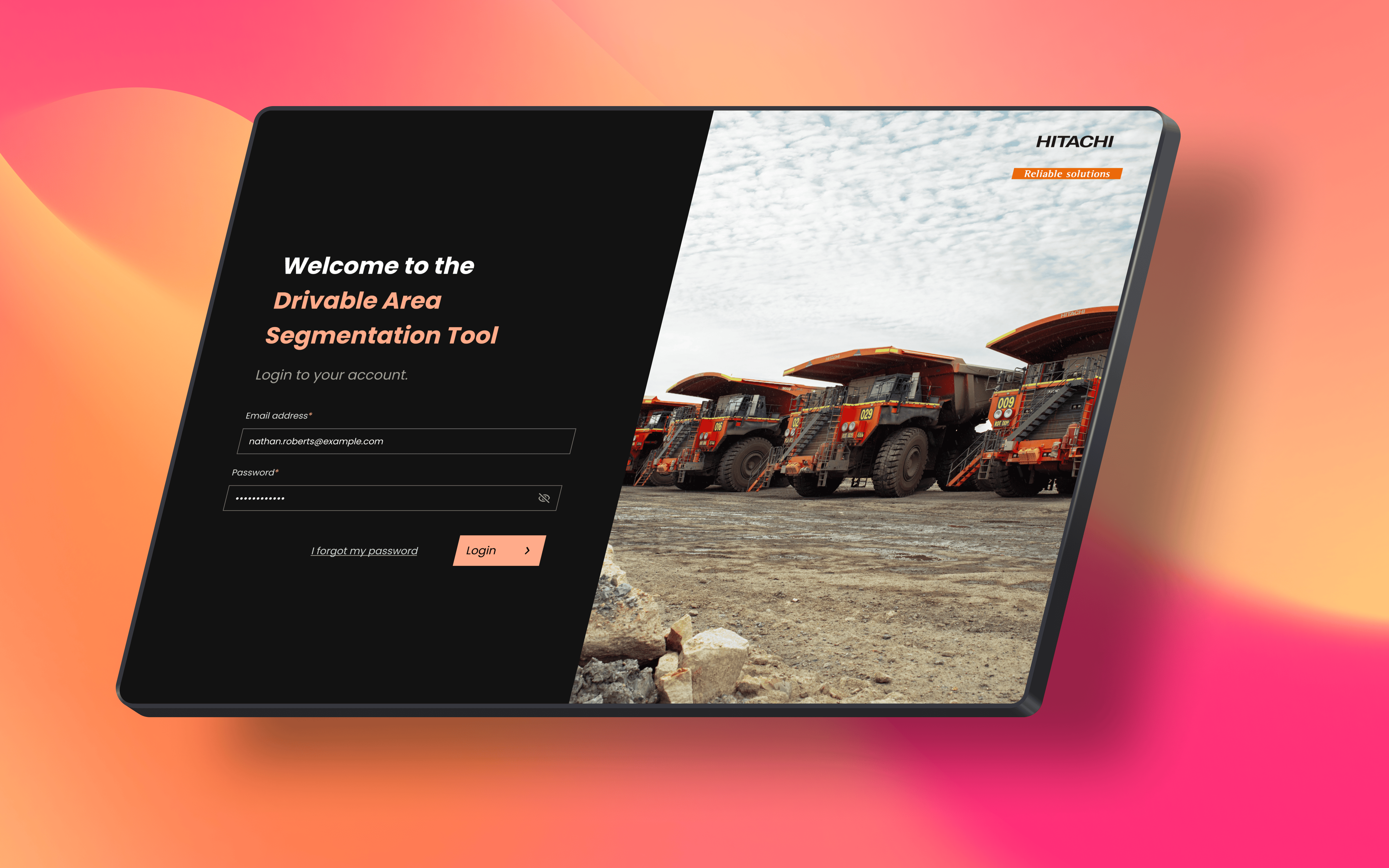
Hitachi’s Mining Division partnered with Spacesium to build DAS (Drivable Area Segmentation), a web-based SaaS platform for planning and managing mining operations through interactive 3D site scans. I was responsible for designing the user interface for the DAS platform while integrating Hitachi’s existing enterprise design system.
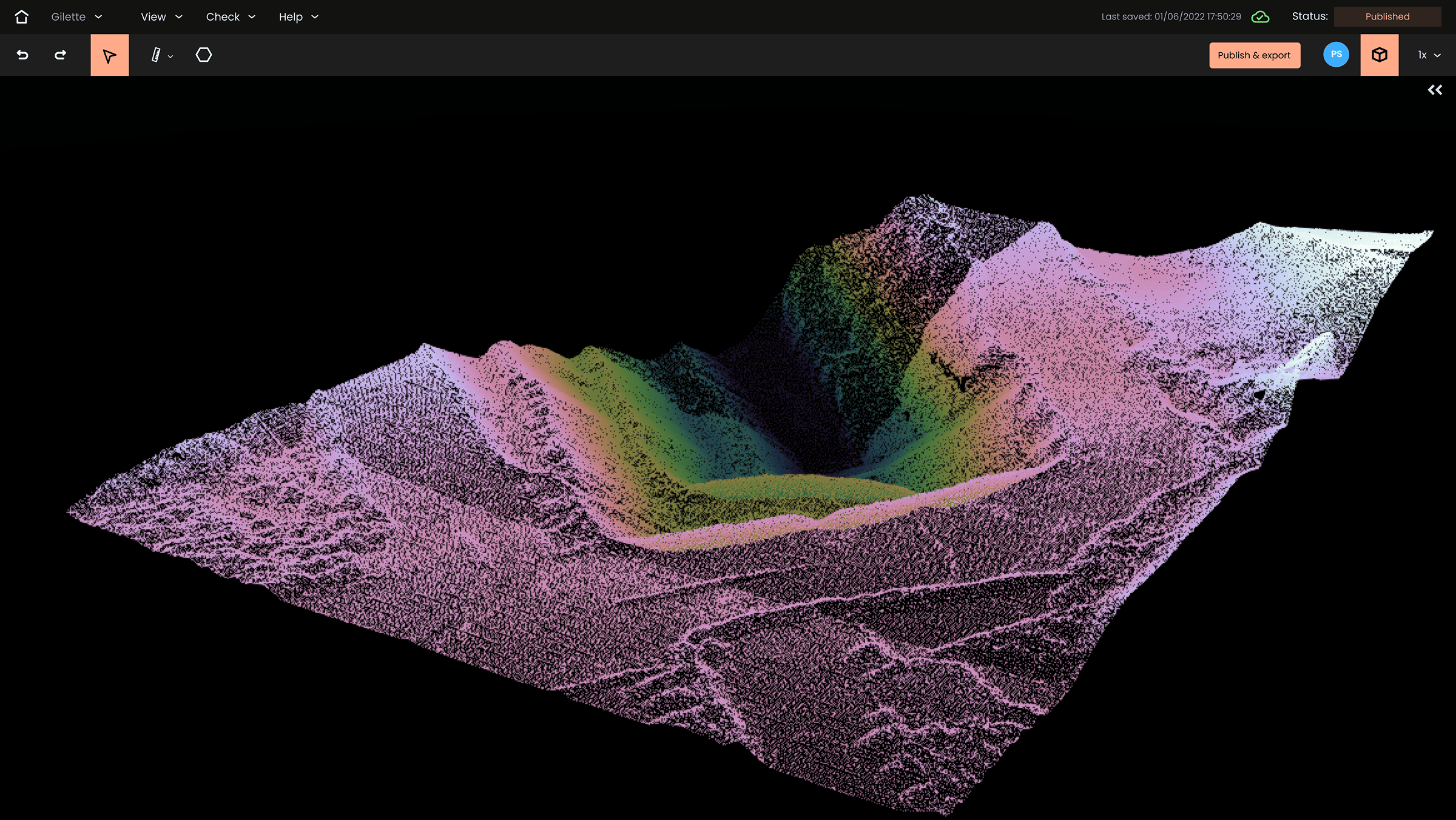
The tool allows users to upload 3D map data, identify drivable areas, and overlay measurements like elevation, slope, and boundaries within a live project environment.
Challenges
• Integrating new features into Hitachi’s rigid, existing design system
• Simplifying complex geospatial data overlays for fast decision-making
• Maintaining consistent enterprise-grade UI standards
• Designing interactive tools for users with varying technical knowledge
Goals
• Design an intuitive, technical data viewer for mining site managers
• Ensure seamless integration with Hitachi’s current design system components
• Provide tools for real-time measurements and boundary planning within a 3D environment
• Support both on-site operations and remote engineering teams
Process Highlights
• Reviewed Hitachi’s internal platform to align design patterns and UI conventions
• Worked with engineers and project managers to prototype interactive overlays within 3D map environments
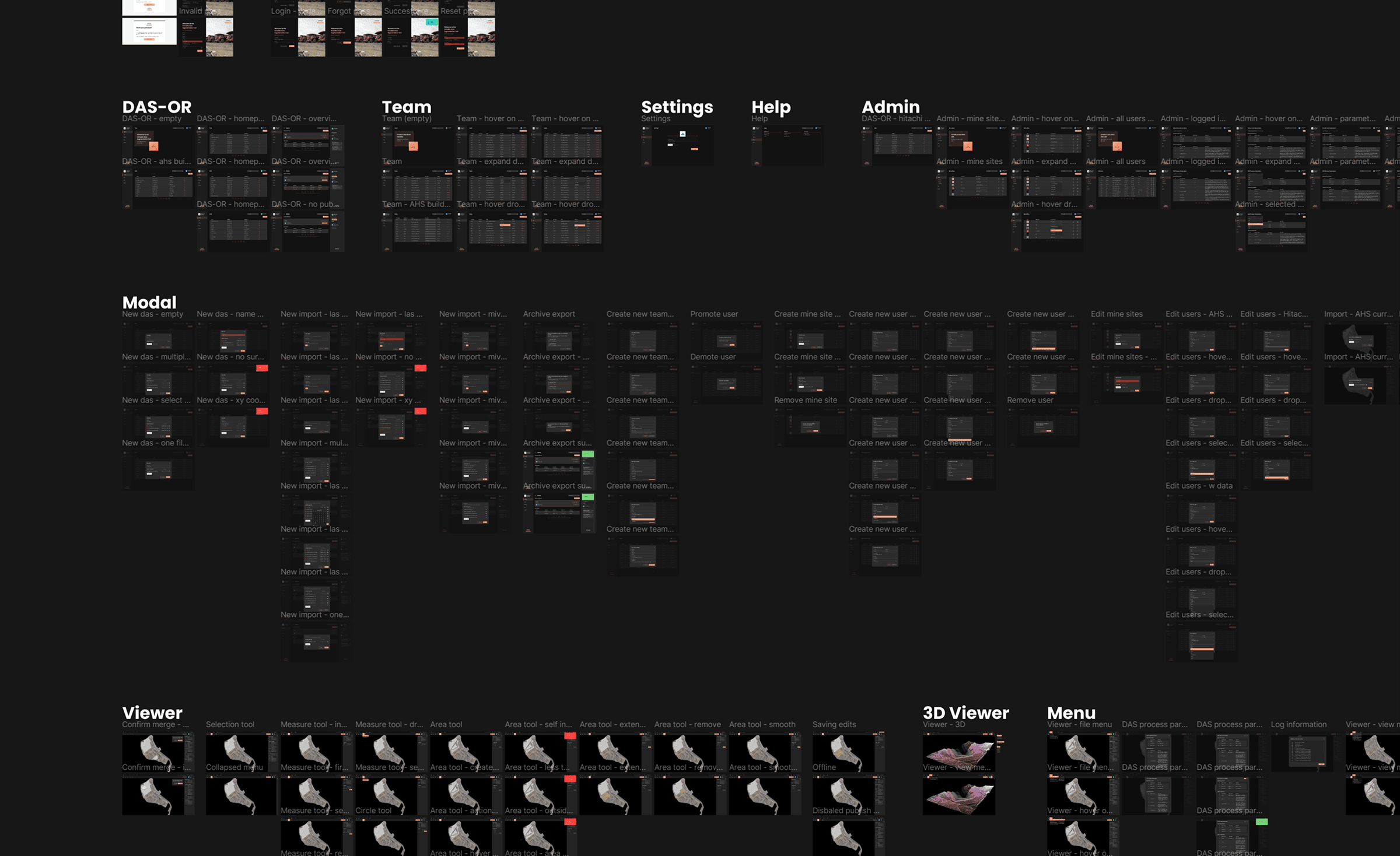
• Iterated on measurement tools, segmentation workflows, and site plan visualization features
• Delivered a clean, consistent UI adhering to Hitachi’s enterprise guidelines while improving usability
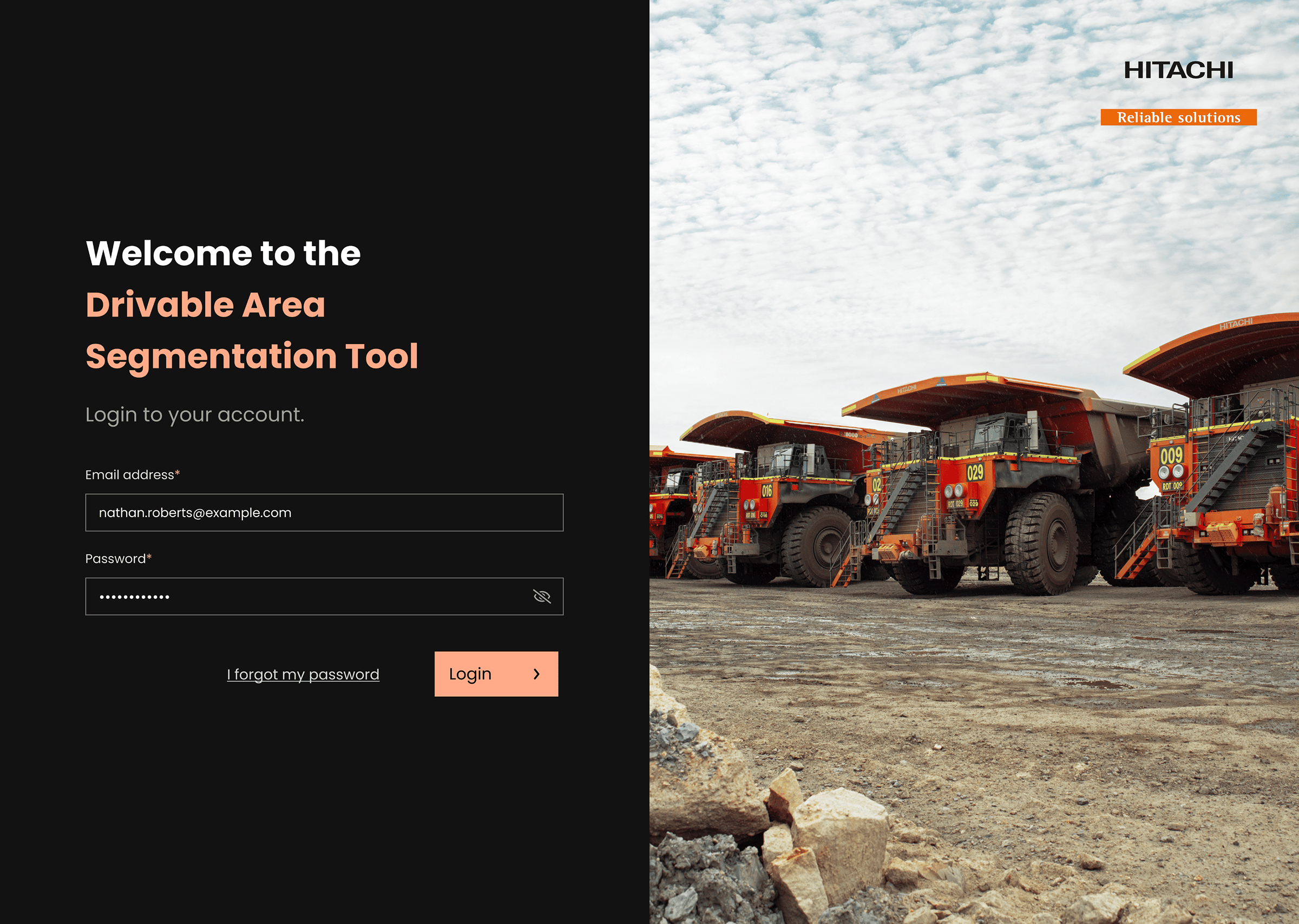
Log in
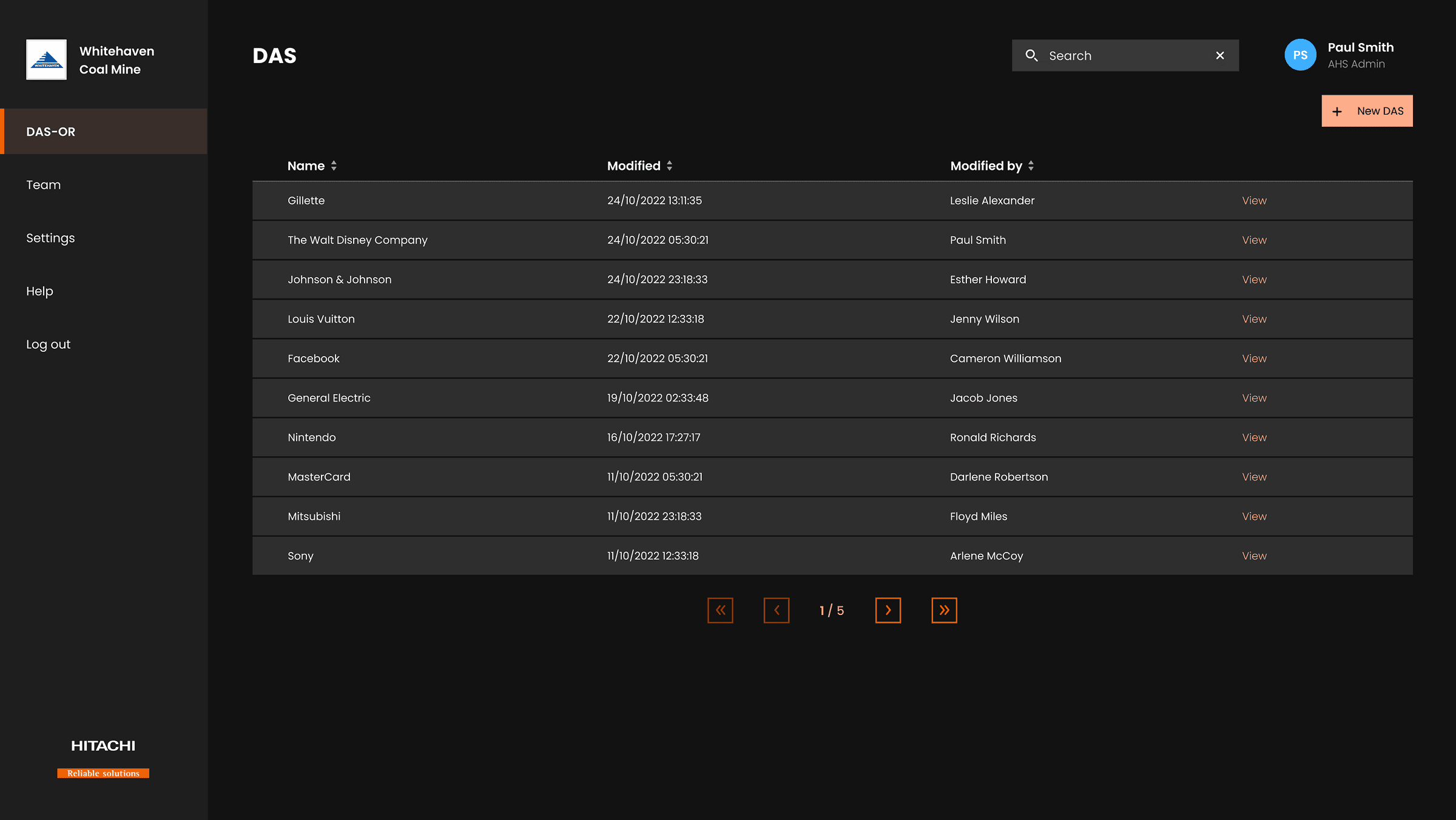
Dashboard
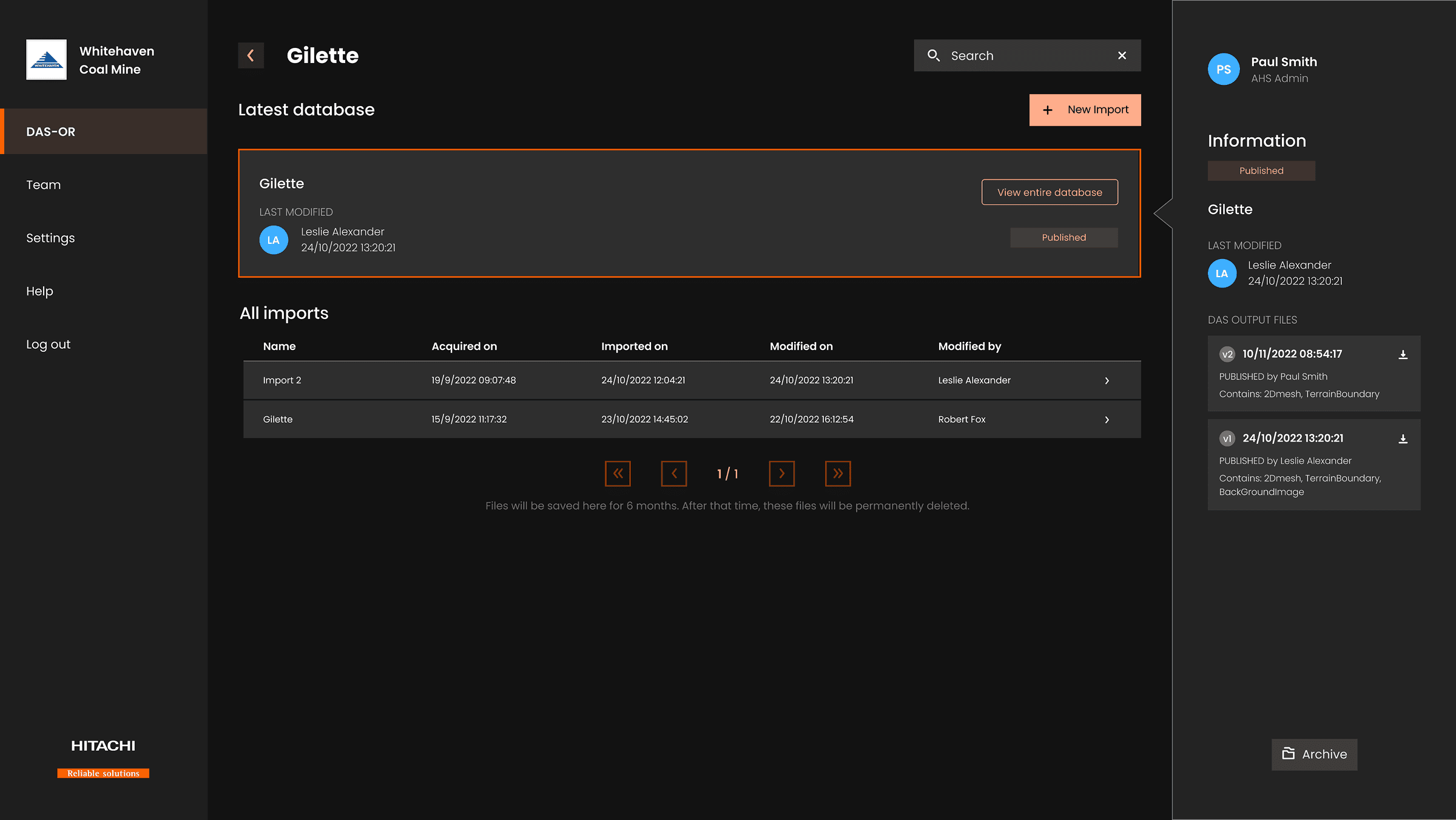
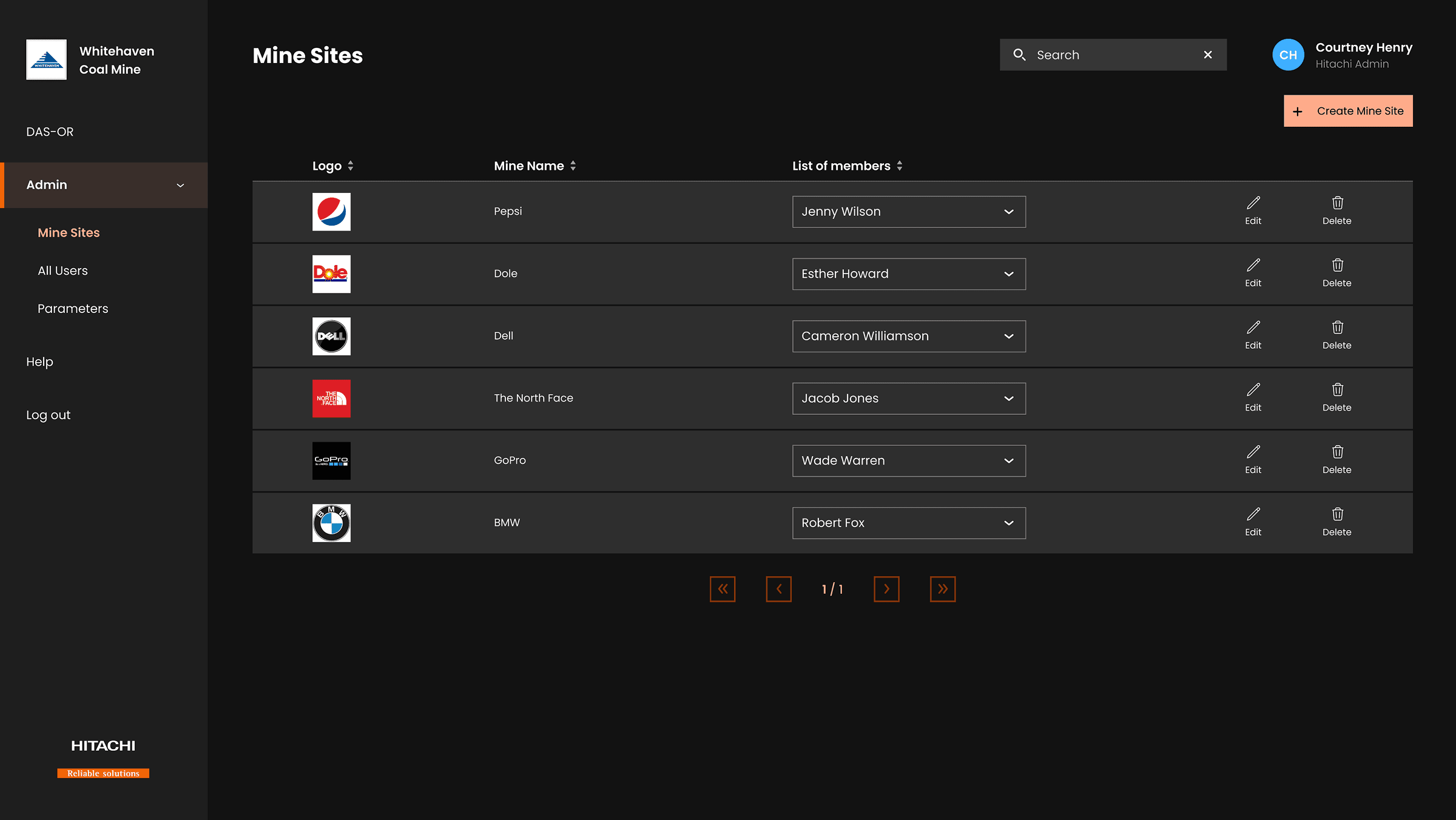
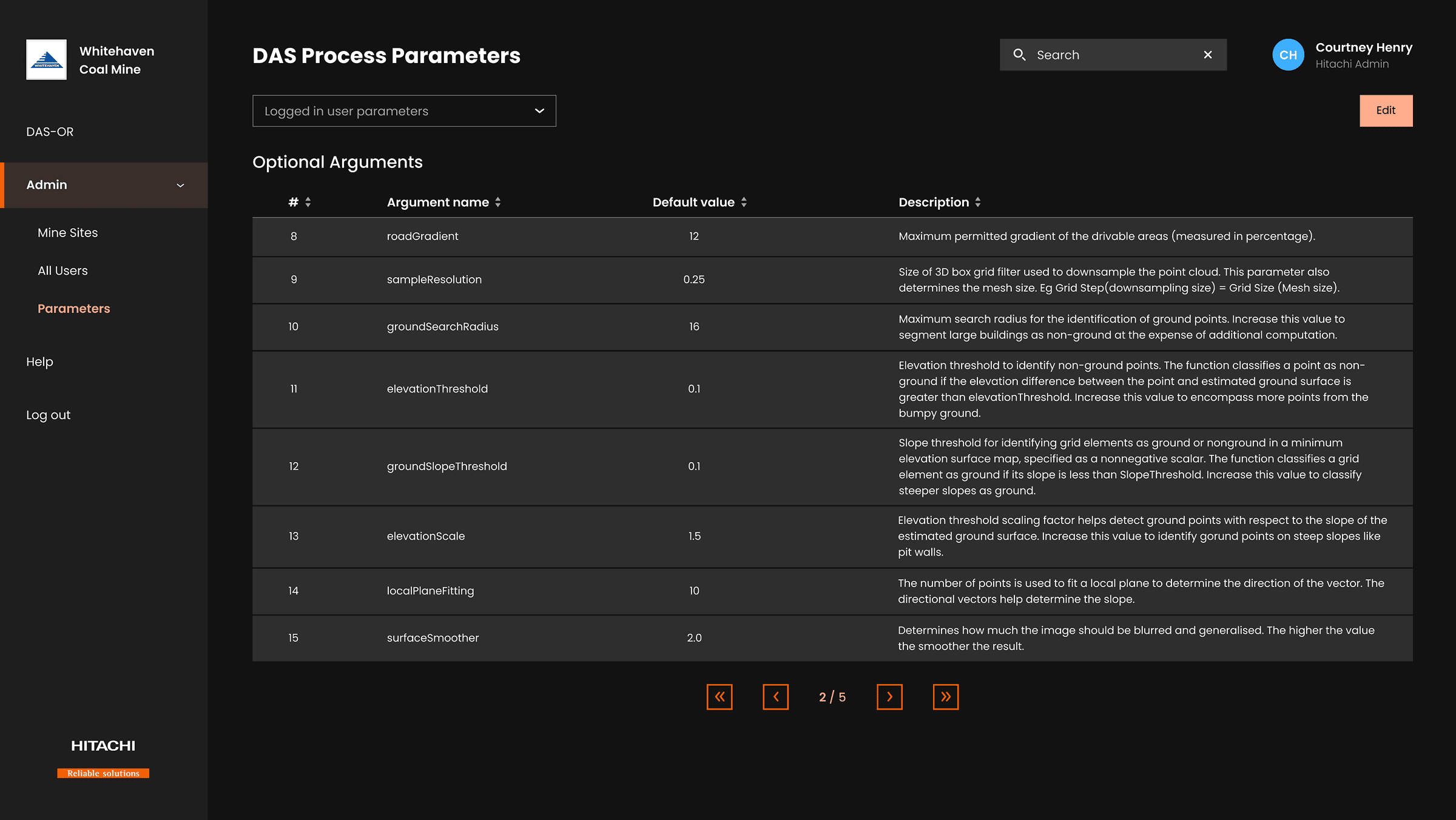
Map viewer

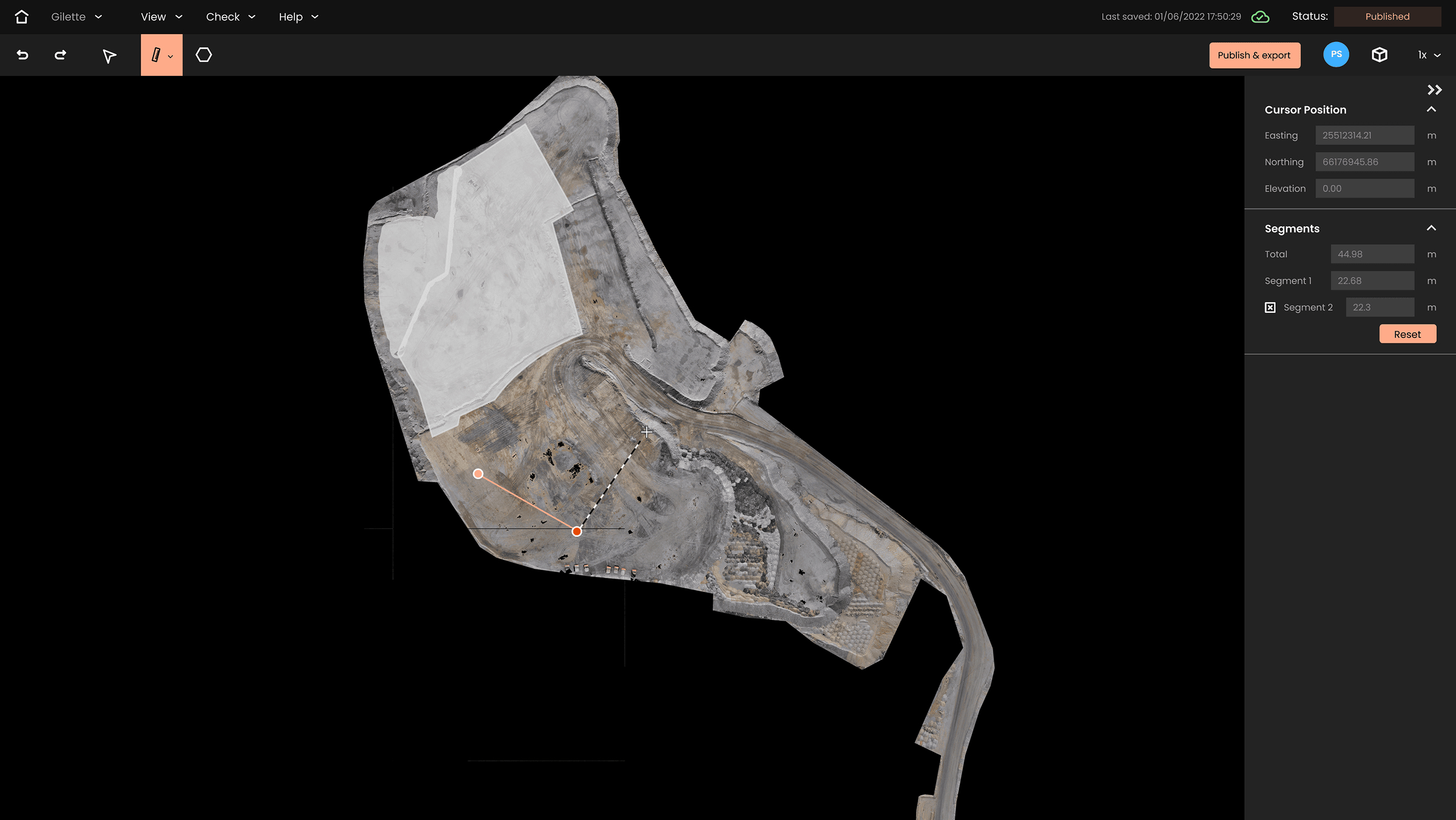
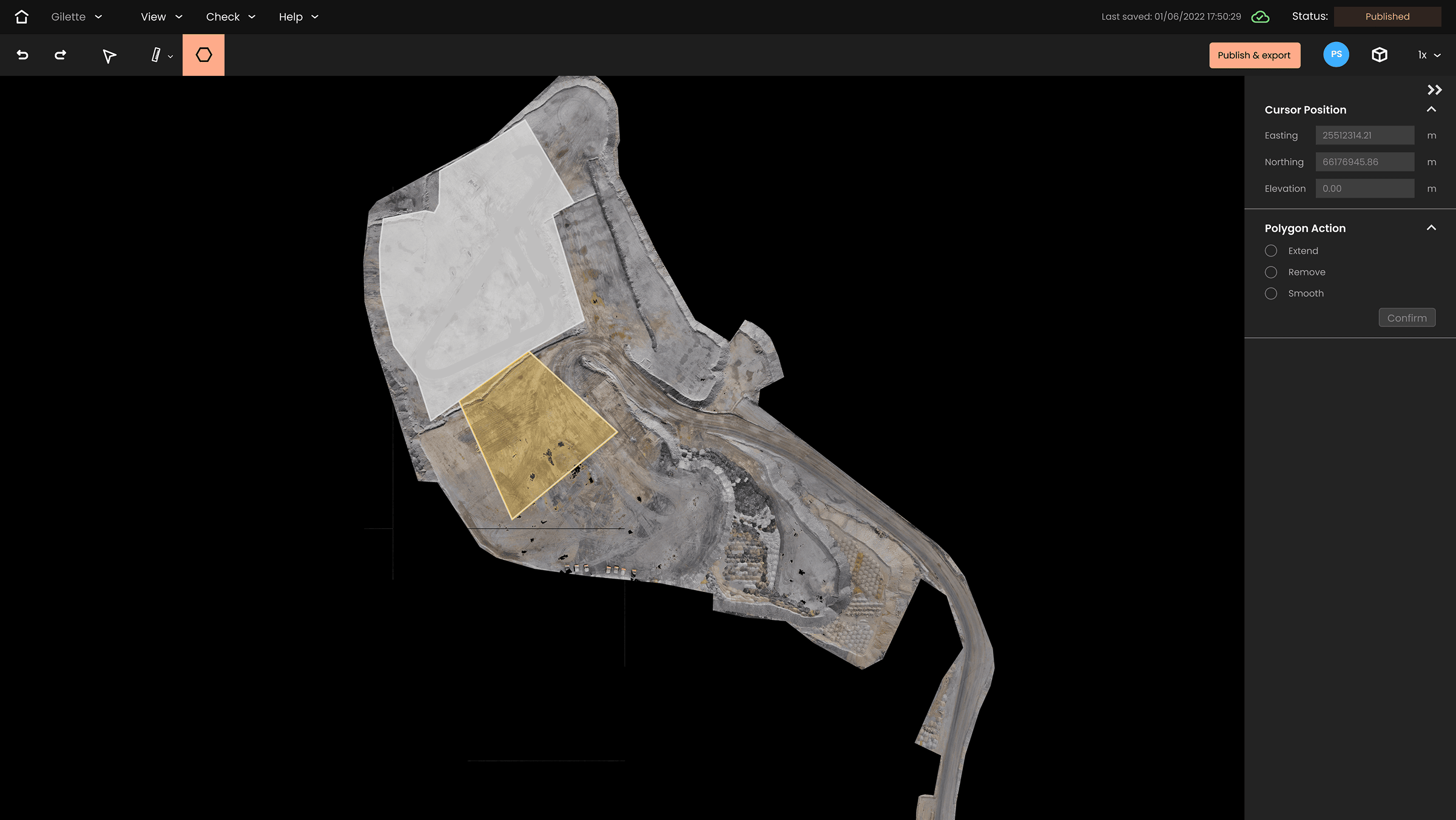
Project
Outcome
• Successfully delivered UI designs integrated into Hitachi’s DAS platform
• Improved site manager workflows through streamlined segmentation and measuring tools
• Enabled fast planning and safety adjustments via accessible 3D data overlays
• Maintained strict brand and interface consistency while modernizing interaction flows